Choosing the right paper can shape an entire global printing project. Paper 70gsm Offset offers a practical balance between lightness, printability, and handling. It moves efficiently through high-speed offset presses. It also reduces shipment weight when thousands of sheets cross borders.
Dr. Martin A. Hubbe, a respected paper-science researcher, explains, “Paper is a fiber network; its performance depends on how that network is formed.” This principle matters in everyday production. A 70gsm sheet may feel light, yet it can support sharp text, clean line work, and dependable folding when properly manufactured. Its smooth surface helps ink transfer evenly. Its moderate opacity supports magazines, manuals, inserts, and commercial documents.
The result is not automatic. Paper quality varies between mills, batches, and climates. Humidity can affect curl, feeding, and dimensional stability. A printer in Singapore may face different storage conditions than one in Stockholm. That difference deserves attention.
Paper 70gsm Offset can also support more efficient logistics. Lower basis weight may reduce pallet mass, freight impact, and warehouse pressure. However, thinner is not always better. Excessive show-through or weak stiffness can damage the reading experience. That trade-off should be tested, not assumed.
A responsible selection process compares brightness, opacity, moisture behavior, surface finish, and certification. It also checks press compatibility before large-scale production. Small trials reveal problems early. Sometimes, the cheapest sheet creates expensive rework. That is worth remembering.
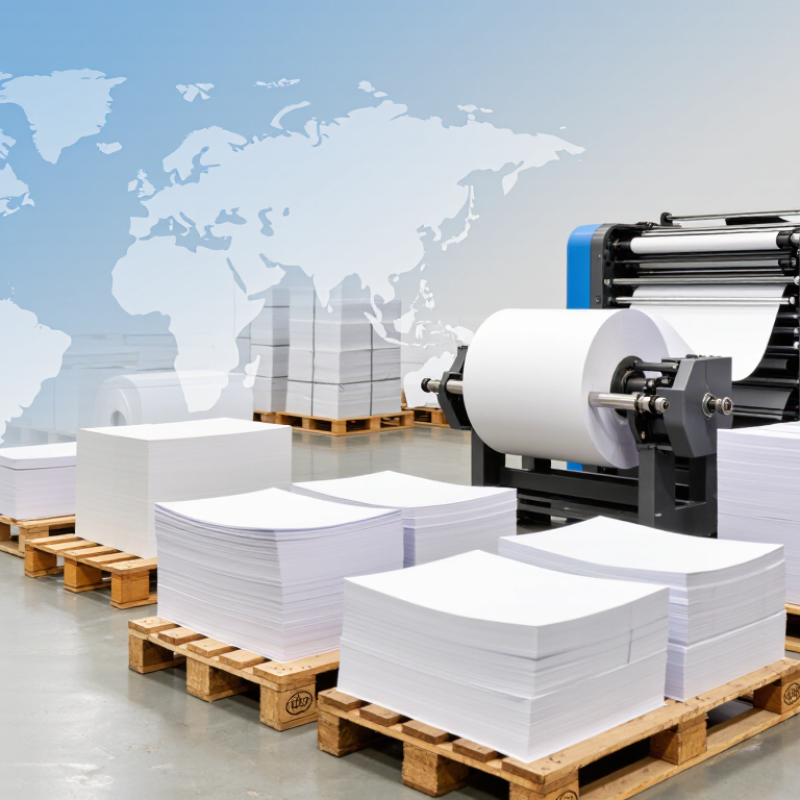
Why Choose 70gsm Offset Paper for Global Printing?
70gsm Defined: 70 g/m² Grammage in Global Print Specifications
In international printing, 70gsm means one square meter of paper weighs 70 grams. This is grammage, not thickness. The distinction matters when buyers compare specifications across countries, suppliers, and sheet sizes.
A 70gsm offset sheet often offers practical balance. It is light enough for manuals, forms, notebooks, and everyday office documents. It also supports efficient transport because each carton carries less weight. During press checks, operators usually examine feeding, ink absorption, curl, and show-through. A smooth surface helps small text remain clear. However, grammage alone cannot predict performance.
Pulp composition, moisture, formation, and caliper can change the result. Two sheets may both be 70gsm, yet feel noticeably different in the hand. I have seen lightweight paper run smoothly on one press and curl on another. That experience makes testing essential. Request technical data for grammage tolerance, thickness, opacity, brightness, and moisture. Confirm whether measurements follow recognized international testing methods. A small sample run can reveal jams, weak folding, or excessive ink penetration before full production.
Paper selection also depends on the document itself. Dense black areas may need stronger opacity. Double-sided forms may require better resistance to show-through. Very fine images might perform better on a heavier grade. Seventy grams is useful, but it is not a universal answer. A careful specification should state 70 g/m², sheet dimensions, grain direction, and intended printing process. One detail is easy to miss.
Reference specifications and planning values for general-purpose uncoated offset paper
| Data Dimension | Typical Value or Definition | Global Print Relevance | Reference or Calculation Basis |
|---|---|---|---|
| Grammage | 70 g/m² | Provides a lightweight but practical sheet for everyday documents, inserts, forms, and book interiors. | Mass per unit area, commonly specified according to ISO 536. |
| Imperial Paper Equivalent | Approximately 47 lb text | Helps printers compare metric specifications with common North American paper-weight terminology. | Approximate conversion; commercial paper classifications can vary by paper grade and basis size. |
| Typical Thickness | Approximately 85–100 µm | Supports compact folding, efficient mailing, and higher sheet counts without excessive bulk. | Typical range for uncoated offset grades; actual thickness depends on density and manufacturing conditions. Thickness is commonly measured under ISO 534. |
| Sheet Opacity | Typically about 88–93% | Offers useful show-through control for standard single-sided or moderate two-sided printing. | Indicative range for ordinary 70gsm offset paper; opacity varies with furnish, fillers, shade, and formation. |
| Surface Finish | Uncoated, smooth or machine-finished | Accepts offset inks while retaining a natural writing surface for handwriting, stamping, and office use. | Finish selection should match the intended ink, drying method, and required image quality. |
| Common Print Process | Sheet-fed or web offset printing | Suitable for text-heavy materials, internal pages, forms, manuals, newsletters, and general commercial print. | Press compatibility also depends on paper moisture, grain direction, caliper, and press settings. |
| Standard A4 Sheet Mass | Approximately 2.18 kg per 500 sheets | Useful for estimating carton weight, freight requirements, storage capacity, and mailing costs. | Calculation: 0.210 m × 0.297 m × 70 g/m² × 500 = approximately 2.18 kg. |
| Standard A3 Sheet Mass | Approximately 8.73 kg per 500 sheets | Supports production and logistics planning for larger-format documents and imposition layouts. | Calculation: 0.297 m × 0.420 m × 70 g/m² × 500 = approximately 8.73 kg. |
| US Letter Sheet Mass | Approximately 2.11 kg per 500 sheets | Provides a practical comparison for North American document production and office-print planning. | Calculation: 8.5 in × 11 in converted to square metres × 70 g/m² × 500. |
| ISO A-Series Compatibility | A4: 210 × 297 mm; A3: 297 × 420 mm | Supports consistent international trimming, folding, imposition, and document exchange. | Sheet dimensions are defined by the ISO 216 A-series format system. |
| Grain Direction | Long grain or short grain, specified by the supplier | Correct grain selection improves folding quality, dimensional stability, and finishing performance. | Grain direction is not determined by grammage and should be confirmed before production. |
| Moisture and Dimensional Stability | Condition paper before printing | Reduces curl, registration problems, static, and feeding issues when moving paper between climates. | Store sealed paper in a stable indoor environment and allow it to acclimatize before opening. |
| Typical Applications | Books, forms, flyers, manuals, office documents, and newsletters | Balances printability, handling, portability, and material consumption for high-volume work. | Final suitability depends on ink coverage, required opacity, finishing, folding, and end-use durability. |
| Material Efficiency | 30% lower grammage than 100gsm paper | Can reduce paper mass and transport weight when the application does not require heavier stock. | Comparison: (100 − 70) ÷ 100 = 30%; total project savings depend on sheet count and format. |
| Specification Check | Confirm tolerance, moisture, caliper, shade, opacity, and grain | Improves consistency across different mills, countries, climates, and print runs. | Grammage alone does not fully define print performance; request a technical data sheet or physical sample. |
Note: Values marked as typical or approximate are planning ranges rather than universal limits. Actual performance may vary according to pulp composition, fillers, formation, surface treatment, moisture content, and production tolerances.