How to Choose the Best Wooden Playground Equipment for Kids?
Choosing the right wooden playground equipment for kids is crucial for fostering their development. Research shows that outdoor play is essential. According to the American Academy of Pediatrics, children need at least 60 minutes of active play each day. Wooden playground equipment can provide a safe and engaging environment for this. However, selecting the best equipment isn’t always straightforward.
Quality matters. A report from the International Play Equipment Manufacturers Association highlights that well-constructed wooden playsets can outlast plastic ones. Alongside durability, the materials should be non-toxic and free from harmful chemicals. It’s essential to prioritize the safety features of the equipment. Many parents overlook the importance of proper installation and maintenance, which can lead to potential dangers.
While it’s easy to be attracted to aesthetics, functionality is key. Not all equipment is created equal. Some designs may not suit every age group. It’s vital to consider the size of your backyard and the number of kids who will use it. Reflecting on your space and needs can lead to a more informed decision. Ultimately, investing in quality wooden playground equipment can significantly enhance children's play experience.
Understanding the Importance of Wooden Playground Equipment for Kids
Wooden playground equipment plays a crucial role in children’s development. It allows kids to engage in physical activities, fostering strength and coordination. According to the American Academy of Pediatrics, outdoor play is essential for children's health. It helps them develop social skills and encourages teamwork.
Choosing quality wooden materials can promote safety. Research indicates that wooden equipment has a lower injury rate compared to metal or plastic alternatives. A study from the National Program for Playground Safety shows that well-maintained wooden structures significantly reduce accidents. The tactile experience of wood also invites imaginative play, enhancing children’s creativity.
However, not all wooden equipment is made equally. Cheaper options may not meet safety standards. Importantly, parents should assess the condition of the equipment regularly. Rotting wood or splinters can pose risks. Equipment may require maintenance to ensure it is safe for children. Regular checks and repairs can prevent injuries and enhance the play experience.
Key Factors to Consider When Selecting Wooden Playground Equipment
When choosing wooden playground equipment, safety should always be a priority. Be sure to check for smooth edges and sturdy construction. Look for non-toxic finishes that won't harm your children. A safe design creates a fun environment for family play.
Consider the age range of your children. Equipment should be appropriate for their developmental stage. For younger kids, smaller slides and climbing structures are best. Meanwhile, older kids may enjoy more adventurous options like swings or larger climbing frames. Each piece should encourage physical activity while promoting creativity.
Lastly, think about the available space. Measure your yard carefully before making a purchase. Some equipment can appear larger in photos than in reality. Ensure you leave enough room for safe play around the equipment. A cramped space can lead to accidents and hinder enjoyment. It's essential to create an inviting, spacious area for kids to explore freely.
How to Choose the Best Wooden Playground Equipment for Kids? - Key Factors to Consider When Selecting Wooden Playground Equipment
| Feature |
Description |
Safety Rating |
Age Group |
Maintenance Needs |
| Swing Set |
Traditional swings made from sturdy wood; designed for safe swinging. |
ASTM Certified |
2-10 years |
Low, occasional wood treatment required. |
| Climbing Frame |
Wooden frame with climbing ropes and netting for active play. |
EN 1176 Compliant |
3-12 years |
Medium, check for wear on ropes. |
| Playhouse |
Small wooden house with windows and door for imaginative play. |
CPSC Approved |
2-8 years |
Low, clean surfaces and check for splinters. |
| Slide |
Wooden slide with a smooth slope for sliding fun. |
ASTM Certified |
3-10 years |
Medium, inspect for stability regularly. |
| Seesaw |
Wooden seesaw for two children with safety grips. |
CPSC Approved |
3-10 years |
Low, check for secure fittings. |
Evaluating Safety Standards and Certifications for Equipment
Choosing wooden playground equipment for kids involves careful consideration of safety standards. These standards help ensure that the equipment is not only fun but also secure. Always look for equipment that has undergone rigorous testing. This testing checks for hazards like sharp edges or potential choking risks. Proper certification from recognized organizations is crucial. It indicates that the equipment meets specific safety criteria.
Certification often includes materials testing. The wood should be durable and treated to resist decay. Many parents overlook this aspect, assuming all wood is safe. However, untreated wood can splinter and pose risks. It's wise to ask about the sourcing of the wood used. Local materials can often be safer and more reliable.
Installation is another factor that impacts safety. Equipment should be set up following precise guidelines to prevent accidents. A poorly installed swing set can tip over, leading to injuries. Regular maintenance checks are also essential. Equipment might wear down over time, making it less safe for kids. Skipping these can lead to oversights, resulting in unsafe play conditions. Each of these aspects invites reflection on community standards for safe play.
Assessing Durability and Weather Resistance of Wooden Structures
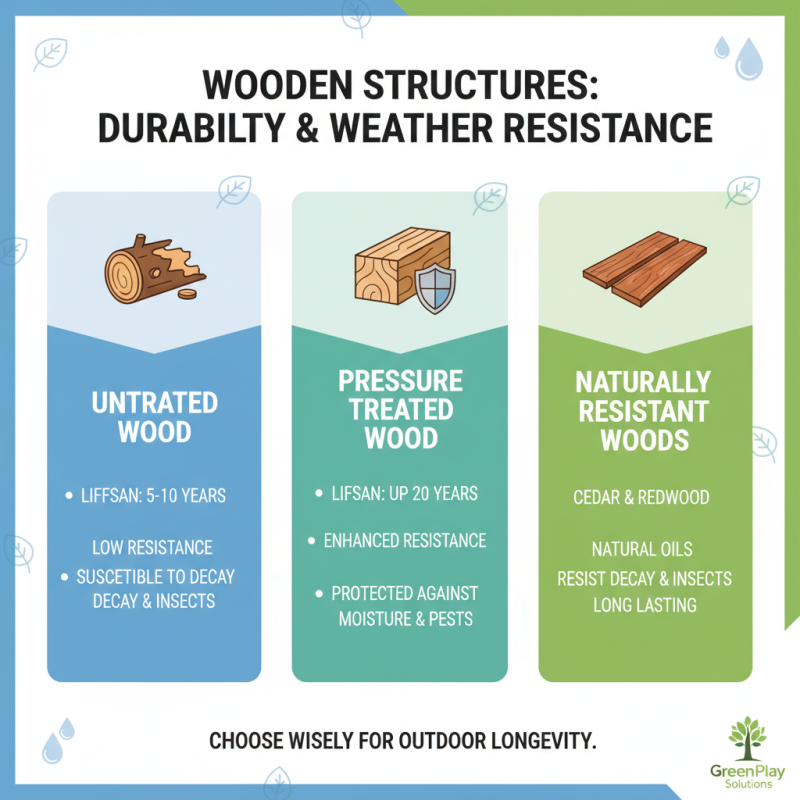
When selecting wooden playground equipment, durability and weather resistance are critical. Reports indicate that untreated wood lasts around 5-10 years. However, pressure-treated wood can extend this lifespan significantly, up to 20 years, especially in outdoor environments. It's essential to look for wood types that naturally resist decay, such as cedar or redwood. These woods possess oils that help withstand moisture and insects, enhancing their longevity.
Weather resistance is not just about the wood type. Proper sealing and maintenance play a crucial role. Experts recommend applying sealants annually to protect against rain and UV rays. The absence of maintenance can lead to rotting and splintering, which can be hazardous for children. Observing local climate conditions can guide the choice of finishes and treatments.
Children’s safety is paramount. Weak spots in wooden structures may go unnoticed during initial inspections. Regular checks can reveal potential issues, such as cracks or weakened joints. Addressing these can prevent accidents and prolong the equipment's usability. Balancing quality and cost is vital, as sometimes the cheapest options may lack the necessary durability for outdoor settings.
Choosing the Right Size and Design for Your Playground Space
When designing a playground, size and design are crucial. Start by measuring your available space. You want your playground equipment to fit comfortably. Avoid overcrowding, which can lead to safety issues. Children need room to run and play freely without constant obstacles.
Consider the age range of the children using the playground. For younger kids, smaller structures are appropriate. Equipment should be scaled to their height and abilities. On the other hand, if the playground caters to older kids, sturdier and more complex equipment can be integrated. However, this raises questions about safety and supervision. Will the equipment still be safe as kids push their limits?
Visualize the layout before purchasing anything. Position swings away from slides to avoid collisions. Think about shade and materials that withstand weather. Wooden structures can be beautiful but may require maintenance. Reflect on how often you are willing to check for splinters or rot. This can impact long-term satisfaction and safety. Balancing aesthetics with functionality is never easy, yet it is essential for a successful playground design.
How to Choose the Best Wooden Playground Equipment for Kids?
This chart represents the popularity of various types of wooden playground equipment among children. Swings and slides are the most favored, while sandpits and playhouses have relatively lower popularity scores.