10 Essential Tips for Choosing the Best Wooden Playground for Your Kids?
When it comes to selecting a wooden playground for your kids, there are numerous factors to ponder. A wooden playground not only serves as a fun escape for children but also contributes to their physical and social development. Understanding the importance of safety, durability, and aesthetics can make this choice easier.
Choosing the right wooden playground involves knowing your child's needs. Observe what engages them the most. Some kids prefer climbing structures, while others may love swings or slides. The playground's design should inspire imaginative play and provide a safe environment. It is essential to examine the materials used, ensuring they are non-toxic and weather-resistant.
In making this decision, don’t just focus on the surface qualities. Dive deeper into the warranty and brand reputation. Not all wooden playgrounds are constructed with the same level of quality. Consider seeking reviews or testimonials from other parents. This will help you find a trustworthy option that meets safety standards. Remember, a wooden playground is an investment in your child's happiness and well-being.
Factors to Consider When Choosing a Wooden Playground for Kids
When selecting a wooden playground for your kids, several factors must be considered to ensure safety and enjoyment. Research from the American Society for Testing and Materials (ASTM) highlights that over 200,000 children visit emergency rooms each year due to playground-related injuries. The design and material quality of a wooden playground can significantly impact safety. Look for structures made from durable hardwoods, such as cedar or redwood, which offer natural resistance to decay and insects.
Space is another critical factor. The playground should have enough room for kids to move freely. A good rule of thumb is to have a safety zone around the equipment, ideally 6 feet wide. Additionally, consider the age range of your children. Equipment designed for younger kids should be lower to the ground, while those meant for older kids can be taller. A playground that meets the developmental stages of your children will encourage safe play and creativity.
Finally, think about the ease of maintenance. Wooden playgrounds can require regular treatments to maintain their appearance and safety. The Consumer Product Safety Commission (CPSC) recommends routine inspections to check for splinters or loose parts. A well-maintained playground not only keeps kids safe but also prolongs the life of the equipment, providing years of fun.
10 Essential Tips for Choosing the Best Wooden Playground for Your Kids
Benefits of Wooden Playgrounds Compared to Other Materials
Wooden playgrounds offer unique benefits that make them stand out. They provide a warm, natural aesthetic. Kids are drawn to the organic feel of wood. Unlike plastic or metal, wood feels safer and more inviting. Children can climb, slide, and explore without the harshness of colder materials. This warmth encourages imaginative play and social interaction.
Durability is another crucial advantage. A well-constructed wooden playground can withstand years of use with minimal maintenance. Even with exposure to the elements, quality wood can last a long time. However, it does require regular checks for splinters or rot. This maintenance can be a minor deterrent, but the natural charm of wood often outweighs these concerns.
Safety is paramount in playground design. Wooden structures can more easily be customized for safety features. Soft, rounded edges and sturdy designs can help prevent injuries. Overall, a wooden playground promotes a nurturing environment for play. Children not only enjoy their time outdoors but also connect with nature. This connection is vital for their overall development.
Safety Features to Look for in Wooden Play Structures
When selecting a wooden playground for your children, safety should be your top priority. Look for sturdy construction, using high-quality wood with no splinters or sharp edges. Equipment should be designed to withstand rough play, ensuring it can handle your kids’ energy. Pay attention to weight limits on swings and climbing structures. It’s crucial to understand that not all wooden playgrounds have the same safety standards.
Inspect the safety features closely. A proper playground should have protective measures like rounded corners and non-slip surfaces. Look for features like safety mats or soft ground cover underneath to cushion falls. Consider additional barriers like safety rails on high platforms to prevent accidents. Always check for certifications that guarantee safety. Sometimes, reviews can provide insight into how other parents feel about specific products.
Don’t forget to assess the playground’s location. A safe space should be away from hazards like roads or sharp objects. Regular maintenance is vital, making sure there are no loose screws or rotting wood. Even the safest design needs routine checks to remain secure. Encourage your kids to play safely but remember that they will explore and take risks. Balancing freedom and safety can be challenging but is essential.
Maintenance Tips for Keeping Your Wooden Playground in Top Shape
Wooden playgrounds invite children to explore and play, but keeping them in top shape requires diligent maintenance. Research shows that properly maintained playgrounds can reduce safety risks by up to 40%. Regular inspections should be routine. Check for splinters, loose screws, and unstable structures. Address these issues immediately to prevent accidents.
Cleaning is also vital. A simple wash-down with mild soap and water can remove dirt and grime. According to industry standards, maintaining wood surfaces helps preserve the integrity of the wood. If you notice any fading, consider applying a sealant every few years. This not only protects the wood but can also enhance its appearance, keeping the playground inviting for kids.
Don't forget about mold and mildew, common enemies of wooden structures. Inspect regularly, especially after heavy rain. If found, treat with a safe, eco-friendly cleaner. Taking these steps ensures that your wooden playground remains a safe and enjoyable space for children. Regular upkeep demands time and effort, but the safety and fun it provides make it worthwhile.
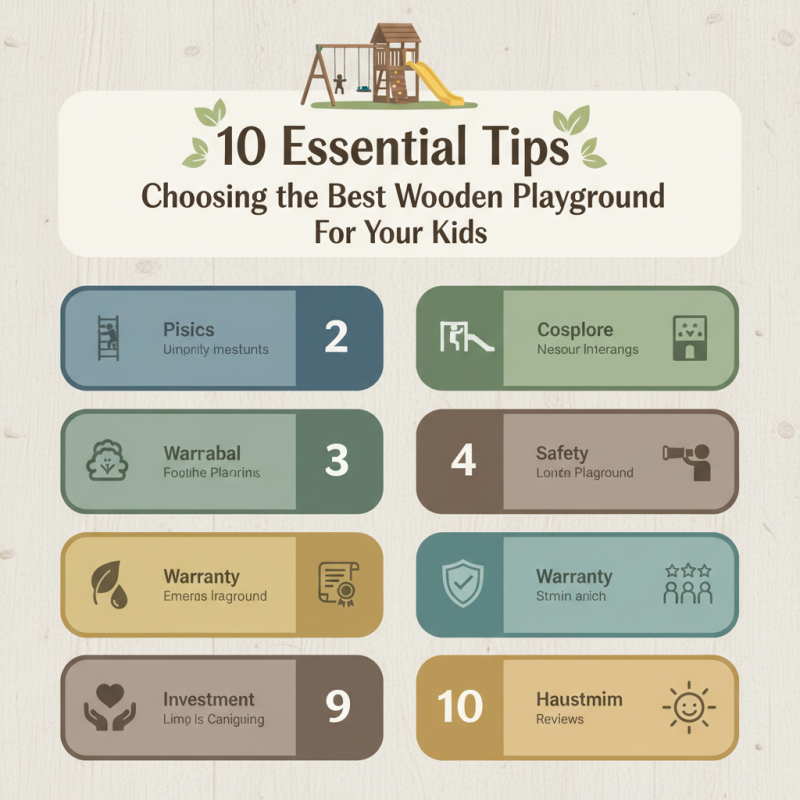
10 Essential Tips for Choosing the Best Wooden Playground for Your Kids
| Tip No. |
Tip |
Details |
| 1 |
Choose Quality Wood |
Select high-quality, treated wood to ensure durability and safety. |
| 2 |
Safety Standards |
Check that the playground meets safety standards set by local authorities. |
| 3 |
Age Appropriate |
Ensure the playground is suitable for the age group of your children. |
| 4 |
Space Requirements |
Consider the space available in your yard for installation. |
| 5 |
Durability |
Look for wood that is resistant to rotting and warping. |
| 6 |
Easy Maintenance |
Select designs that require minimal upkeep with easy access for maintenance. |
| 7 |
Accessories and Add-ons |
Consider if the playground allows for accessories like swings, slides, etc. |
| 8 |
Color and Finish |
Choose colors that complement your yard and are resistant to fading. |
| 9 |
Reviews and Recommendations |
Read reviews and get recommendations from other parents. |
| 10 |
Installation Considerations |
Decide if you will install it yourself or hire professionals. |
Maintenance Tips for Keeping Your Wooden Playground in Top Shape
| Maintenance Tip No. |
Maintenance Tip |
Description |
| 1 |
Regular Inspections |
Check for any loose parts or damage at least once a month. |
| 2 |
Clean the Playground |
Remove debris, dirt, and mildew regularly to keep it clean. |
| 3 |
Apply Wood Preservative |
Use wood preservative annually to prolong the life of the wood. |
| 4 |
Check Fastenings |
Inspect and tighten bolts, screws, and other fastenings regularly. |
| 5 |
Repair Damage Promptly |
Fix any damage immediately to prevent further issues. |
| 6 |
Check Ground Stability |
Ensure the ground beneath the playground is stable and leveled. |
| 7 |
Trim Surrounding Vegetation |
Keep plants and shrubs trimmed back to avoid damage to the playground. |
| 8 |
Store Equipment Properly |
Remove or store equipment during harsh weather to protect it. |
| 9 |
Educate Children |
Teach kids how to use the equipment safely to prevent accidents. |
| 10 |
Schedule Annual Maintenance |
Consider hiring a professional for an annual safety check. |
Recommended Age Groups for Different Wooden Playground Equipment
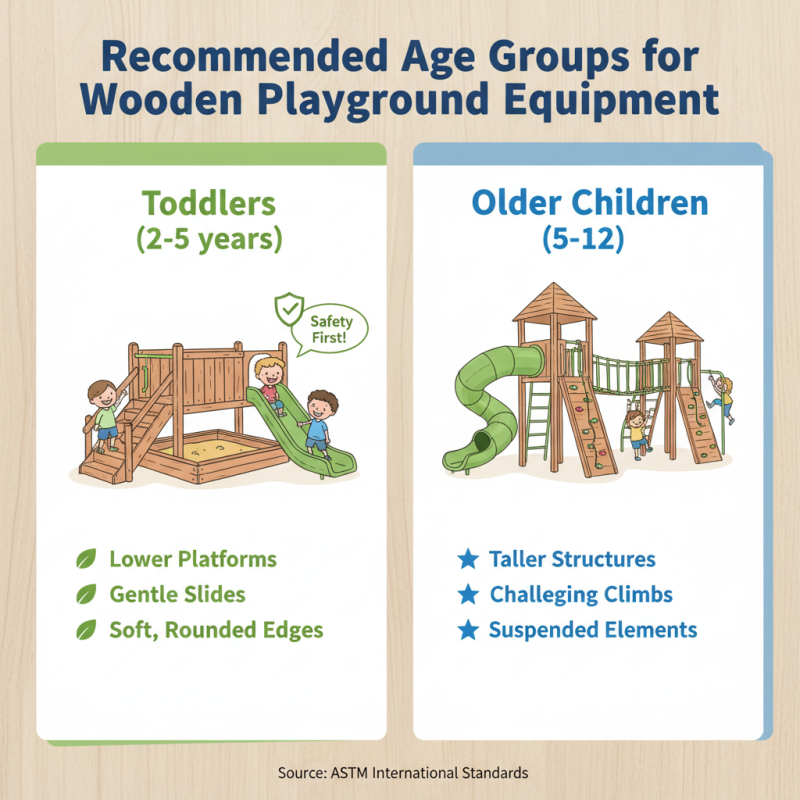
When selecting wooden playground equipment, it’s crucial to consider the recommended age groups for various structures. According to the American Society for Testing and Materials (ASTM), equipment must suit children’s developmental stages. For toddlers aged 2 to 5, choose playgrounds with lower platforms and gentle slides. Safety is key. Features like soft, rounded edges can reduce injuries significantly.
For kids aged 5 to 12, climbing structures become essential. Children need more challenging activities to foster growth. According to a report from the National Program for Playground Safety, 70% of playground injuries stem from falls. So, ensuring your playground has ample safety measures, like proper cushioning, is vital. A blend of slides, swings, and climbing walls promotes motor skills and physical coordination.
Yet, not all products ensure quality. Variations in construction can be misleading. Regular inspections and maintenance matter. Look for equipment that stands the test of time and weather. Awareness of safety standards and quality can help mitigate risks. Always check certifications. Construction standards vary across regions. Choosing a reputable source is important for the safety of our children.