• Monday

    9:00-5:00

  • Tuesday

    9:00-5:00

  • Wednesday

    9:00-5:00

  • Thursday

    9:00-5:00

  • Friday

    9:00-5:00

  • Saturday

    9:00-4:00

  • Sunday

    CLOSED

Top Swing Set with Slide Buying Guide?

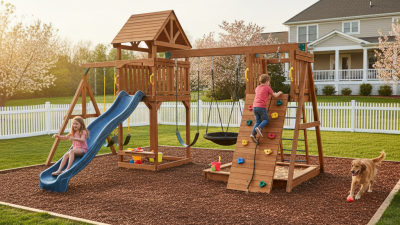
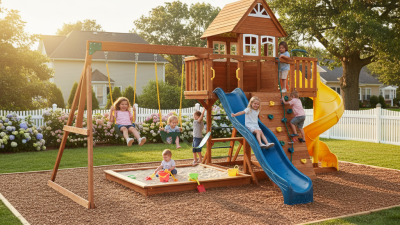
Choosing a swing set with slide is not just a matter of picking bright colors or the tallest tower. It means matching the equipment to children’s ages, available space, and the way they actually play. Picture a small yard, a soft landing area, and a child climbing toward the slide while another waits for the swing. Those details matter.

The U.S. Consumer Product Safety Commission has reported more than 200,000 annual emergency-room visits linked to playground equipment. That figure covers playground equipment broadly; it is not specific to home swing sets. Still, it makes safety worth checking before comparing extras. ASTM F1148-22 sets performance requirements for home playground equipment, including structures with swings and slides. Buyers should also inspect anchoring, hardware, fall zones, and the manufacturer’s age and weight guidance. A label alone cannot confirm that a set suits every yard.

Playground researcher Dr. Joe L. Frost’s work emphasizes the developmental value of children’s play. This is a paraphrase, not a verified verbatim quotation: his research points buyers toward play spaces designed around children’s needs. A useful guide should connect that idea to practical choices, from sturdy swing seats to slide height and accessible climbing steps. Even a beautiful set can be the wrong fit. That judgment is easy to miss. The sections ahead will help compare materials, safety features, sizes, and value—while recognizing that no product listing can replace careful installation and regular checks.
Top Swing Set with Slide Buying Guide?

Classify Swing-and-Slide Sets Using ASTM F1148 Safety Criteria

Top Swing Set with Slide Buying Guide?

Classify each swing-and-slide set against ASTM F1148, the consumer safety specification for home playground equipment. The standard addresses layout, materials, openings, platforms, slides, swings, and protective surfacing. It is a useful screening tool, not a guarantee of safe installation. A responsible buyer should request assembly instructions, maintenance guidance, and any conformity documentation. Claims without evidence deserve caution.

The U.S. Consumer Product Safety Commission estimates that more than 200,000 children receive emergency treatment annually for playground-related injuries. Falls remain a major concern. Measure the fall zone around every swing, slide exit, and climbing access point. Check for head-entrapment openings, sharp edges, exposed bolts, unstable posts, and gaps near moving parts. A four-inch gauge can help identify some hazardous openings, but it cannot replace professional judgment. The ground should absorb impact, remain level, and extend beyond the equipment’s use zones. Grass may look soft. It is not reliable protective surfacing.

Tips: Choose equipment suited to the child’s age and weight. Test every connection by hand before use. Recheck fasteners after the first week and after severe weather. Keep swings separated from slides and walking paths. I would also inspect underneath the platform, where rushed assembly often hides loose hardware. Perfect compliance is difficult to prove. Careful records and repeated inspections make the decision more reliable.
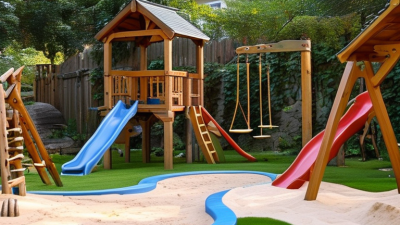
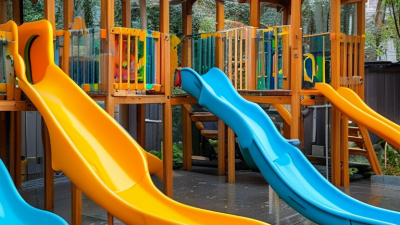
Match Age, User Capacity, and Weight Limits to Product Ratings

Top Swing Set with Slide Buying Guide?

Choosing a swing set with a slide begins with the children who will use it. Age ratings are more than marketing labels. They usually reflect slide height, swing movement, handrail design, and climbing difficulty. A toddler needs low steps, short slides, and enclosed sides. Older children may need taller platforms, but height alone does not prove safety.

Check user capacity carefully. A set rated for three children may limit the total weight, not simply the number of seats. Add each child’s weight, then include realistic movement during swinging. Two children swinging together can create extra force. Leave room for supervision. Crowded platforms often cause pushing, awkward landings, and falls. The manual matters.

Weight limits need close attention. Look for separate ratings for swings, slides, ladders, and platforms. A 120-pound platform rating does not automatically mean a 120-pound swing rating. Some limits also assume one user at a time. That detail is easy to miss. Read the installation instructions before buying, and confirm the ground can support proper anchoring. Local safety guidance may differ, so check it.

I prefer products with clear testing information, stable joints, rounded edges, and replacement instructions. Vague ratings deserve caution. A small design flaw can become obvious after weeks of use. I have also found that children outgrow “multi-age” sets sooner than expected. Measure the available space, including the slide’s exit area, before trusting attractive pictures. Safety rules can feel restrictive, but children change quickly, and product ratings cannot predict every real-life mistake.

Measure Swing Zones: Extend 2× Pivot Height Front and Back

Before choosing a swing set with a slide, measure the swing zone from the pivot point, not the edge of the frame. The U.S. Consumer Product Safety Commission’s Public Playground Safety Handbook recommends extending a swing’s use zone forward and backward by at least twice the pivot height above the protective surface. For a pivot 7 feet high, allow 14 feet in each direction from the point directly below it. Check the set’s instructions too; a home product may specify different spacing.

Mark the full arc on the ground with a tape measure or garden hose. Look for fences, tree trunks, walls, and the slide’s landing area within that space. Small error. Big consequence. Keep the landing area clear, and avoid placing hard edging where a child might fall. The CPSC guidance applies to public playgrounds, so treat it as a useful safety reference, not a substitute for the manufacturer’s layout requirements. Measure again after installation. I’d also recheck if the ground settles or the frame shifts; a tape measure cannot spot every hazard.

Check Surfacing: CPSC Recommends at Least 6 ft Around Equipment

When comparing a swing set with a slide, inspect the ground before the frame. The CPSC recommends protective surfacing extending at least six feet around play equipment. Measure from the equipment’s outer edges, not from the nearest post. This space should remain clear of fences, tree roots, stones, and garden borders.

Choose materials designed for playground impact protection. Engineered wood fiber, rubber surfacing, and approved loose-fill materials can reduce injury risk. Grass and ordinary soil are not reliable protective surfaces. Check the manufacturer’s required depth for the equipment’s fall height. Refill loose material after rain, wind, or heavy use. It can shift away from busy landing zones.

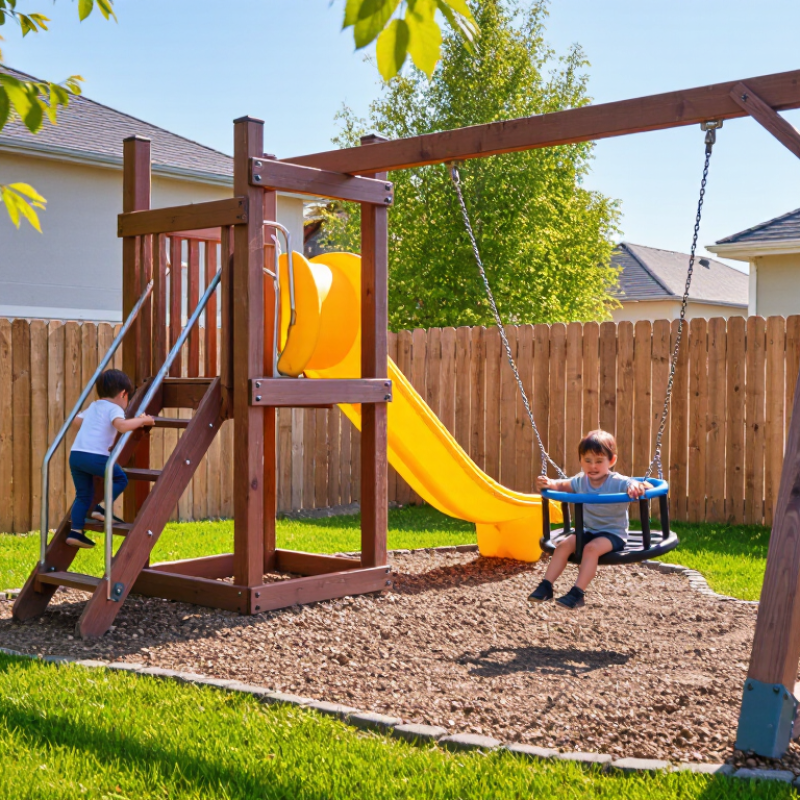
Swings need extra attention. Their protective surface should usually extend farther in front and behind the seats, based on the swing height. A slide also needs a cushioned landing area at its exit. I have learned that a surface can look soft while hiding compacted ground underneath. That is an easy mistake. Walk around the set and check for exposed roots, sharp edges, and thinning material. Measure again after installation. Six feet on paper may become less after edging, settling, or poor maintenance. A safer buying decision considers the yard, drainage, fall zones, and your ability to inspect the surface regularly.

Top Swing Set with Slide Buying Guide: Check Surfacing Clearance

The U.S. Consumer Product Safety Commission recommends at least 6 feet of protective surfacing around stationary playground equipment. For swings, the protective surface should extend in front of and behind the swing by at least twice the height of the swing’s suspending bar.

Assess Anchors, Hardware, Slide Design, and Routine Inspection Needs

Choosing the top swing set with a slide requires more than comparing colors or weight limits. Start with the anchors. Each leg should stay firmly planted when children swing, climb, or land unevenly. CPSC data indicates that about 200,000 children receive emergency treatment for playground injuries annually. Falls remain a major concern, so stability deserves careful attention.

Inspect bolts, washers, chains, and connection points before buying. Hardware should resist loosening, rust, and sharp-edge exposure. The ASTM F1148 standard addresses residential play equipment safety, including structural strength and entrapment risks. A slide should have smooth transitions, secure mounting, and enough clearance at its exit. Wet plastic can become surprisingly fast. Measure the available fall zone, not just the equipment footprint.

Tips: Check anchors after heavy rain and ground freezing. Run a hand over every reachable edge. Look beneath the slide for exposed roots, stones, or hard soil. CPSC guidance recommends routine inspection and maintenance, yet a monthly schedule may be too vague for active households. Check high-use parts weekly, especially swing hangers and slide fasteners. Replace damaged components rather than improvising repairs. No checklist catches everything. Children use equipment unpredictably, and that is where my own inspections sometimes fall short. A slow, hands-on review remains more reliable than a quick visual glance.

Top Swing Set with Slide Buying Guide: Assess Anchors, Hardware, Slide Design, and Routine Inspection Needs
Assessment Area What to Check Practical Buying Guidance Routine Inspection Priority
Anchors and stability Confirm the set has an anchoring system suited to its frame and the intended ground. Check that anchor points are accessible and that the instructions explain installation. Install anchors exactly as directed by the manufacturer. Soil conditions, slopes, and local requirements can affect the appropriate method; do not assume surface stakes are suitable for every site. Use a level, firm installation area. Check for loose, exposed, bent, or pulled-out anchors and signs that the frame shifts during use. Recheck after installation, ground disturbance, or severe weather. Essential
Frame and hardware Look for securely joined frame parts, smooth edges, capped bolt ends, and hardware that is appropriate for outdoor exposure. Confirm that replacement parts and assembly instructions are available. Choose a design with accessible fasteners for tightening and inspection. Follow the supplied assembly sequence and specified hardware; substituting bolts or fittings may affect fit and safety. Inspect fasteners, joints, chains, hangers, and connectors for looseness, wear, cracks, deformation, rust, or missing caps. Tighten or replace parts as directed before use. Essential
Swing seats and hangers Check that seats suit the intended users and that suspension components move freely without sharp edges, pinching points, or visible wear. Keep swings spaced and positioned according to the product instructions. Select an appropriate seat type for the child’s age and ability; supervise children who need help getting on or off. Look for fraying, stretched or damaged chains or ropes, worn connectors, and cracked seats. Check that hangers remain securely attached and do not make unusual noises or bind. High
Slide design and layout Check the slide’s age or user guidance, entry platform, side walls, smooth transitions, and clear exit area. Make sure the slide fits the available yard space. Choose a slide with a suitable height and layout for the intended users. Position it as instructed, with an unobstructed run-out area and no nearby fences, trees, or hard obstacles. Check for cracks, sharp edges, loose connections, fading or deterioration, and objects in the slide path. Keep the surface clear and follow instructions about use in wet or hot conditions. High
Use zone and ground surface Measure the space around the equipment and identify hard surfaces, roots, rocks, low branches, and other obstacles. Follow the manufacturer’s layout and clearance guidance. Use an appropriate impact-absorbing surface where recommended; grass and soil may become compacted and may not provide consistent cushioning. Keep the area free of toys and debris. Check for exposed roots, compacted or displaced surfacing, standing water, and objects that could create trip or impact hazards. Essential
Assembly and user guidance Review the parts list, assembly time, tool requirements, age guidance, maximum user limits, and safety instructions before purchase. Allow enough time and assistance for assembly, and verify all parts before starting. Use the product only for its intended purpose and observe its stated limits. Keep instructions available for maintenance and replacement parts. Recheck warning labels and make sure users understand basic rules, including taking turns and avoiding crowded equipment. High
Inspection routine Determine whether the instructions specify inspection tasks or maintenance intervals, and make sure the owner can access the relevant guidance. Plan brief visual checks before use and more thorough checks at intervals recommended by the manufacturer. Increase checks after storms, heavy use, or changes to the ground or surrounding area. Remove the set from use if a structural part is damaged, an anchor is unstable, or a moving component is unsafe. Repair with compatible parts and restore safe conditions before use resumes. Essential