• Monday

    9:00-5:00

  • Tuesday

    9:00-5:00

  • Wednesday

    9:00-5:00

  • Thursday

    9:00-5:00

  • Friday

    9:00-5:00

  • Saturday

    9:00-4:00

  • Sunday

    CLOSED

Top 10 Laminated Wood Veneer Panels for Global Buyers

Global buyers need more than attractive grain when comparing the Top 10 Laminated Wood Veneer Panels. They need dependable performance, clear documentation, and realistic delivery expectations. A panel may look flawless under showroom lighting, yet reveal uneven bonding near a humid coastal installation. That detail matters.

Laminated Wood Veneer Panels combine thin wood layers, adhesives, and controlled pressing methods. Their quality depends on veneer selection, moisture balance, core construction, surface finishing, and manufacturing discipline. Dr. Barry Goodell, a respected wood science researcher, describes wood as “a complex, anisotropic, and heterogeneous material.” That principle remains important when evaluating panels across different climates and applications.

This guide examines leading options for furniture, doors, wall systems, cabinetry, hospitality interiors, and commercial projects. It considers appearance, thickness consistency, bending resistance, formaldehyde documentation, certification claims, packaging, and supplier communication. FSC or PEFC availability may influence responsible sourcing decisions. Export buyers should also request technical datasheets, sample panels, test reports, and current compliance information.

Small details can change the result. A poorly sealed edge can absorb moisture. A mismatched veneer batch can disrupt an entire room. Delivery delays can also outweigh a modest price advantage. That sounds tidy. It is not.

The rankings are useful, but they are not universal truth. Project conditions differ. A premium panel for a dry office may fail in a demanding marine environment without proper specification. Buyers should compare performance evidence, not photographs alone. This practical review aims to support better questions, fewer surprises, and more confident international purchasing decisions.
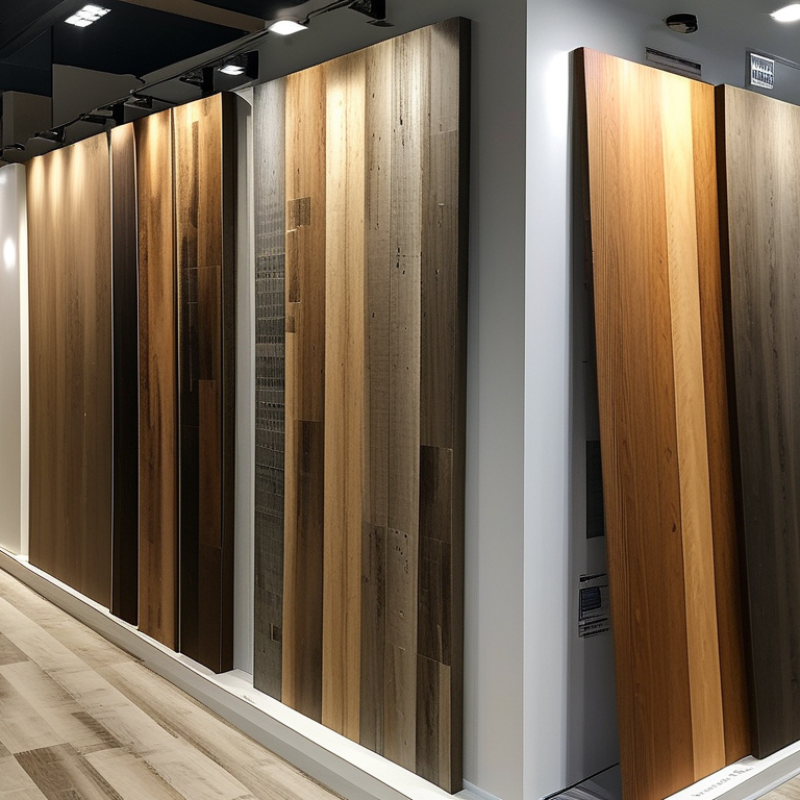
Top 10 Laminated Wood Veneer Panels for Global Buyers

What Laminated Wood Veneer Panels Are and How They Are Made

Laminated wood veneer panels are engineered boards with a thin natural wood layer bonded to a stable core. They offer the appearance of solid timber with improved dimensional control. The core may use plywood, medium-density fiberboard, or particleboard. The core matters.

Manufacturing begins with peeling or slicing logs into veneer sheets. These sheets are dried, graded, and matched for color, grain, and thickness. A manufacturer applies adhesive between layers, then uses pressure and heat to create a firm bond. The panel is trimmed, sanded, and sometimes sealed with lacquer, oil, or a protective coating. Grain direction must be controlled carefully. Poor alignment can create visible breaks across a cabinet door.

For global buyers, production details deserve close inspection. Ask about substrate density, veneer thickness, moisture content, bonding strength, and surface finish. Test reports should match the destination market and intended indoor use. A beautiful face layer does not guarantee a durable panel. Small defects remain.

Humidity is another concern. Panels can expand or contract when storage conditions change. Edge sealing and correct packaging reduce this risk, but they do not remove it. Buyers should inspect samples after delivery, not only before purchase. The term “laminated veneer panel” can also vary between suppliers, so technical drawings and written specifications are essential. Bulk orders need consistency checks, because natural grain never repeats perfectly.

Key Performance Factors for Comparing Veneer Panel Products

Comparing laminated wood veneer panels requires more than inspecting color and grain. The core affects stiffness, screw holding, weight, and dimensional stability. A panel with balanced layers usually resists warping better than one with uneven construction. Check veneer thickness, layer direction, and panel tolerance before ordering large quantities.

Moisture performance deserves close attention. Ask for moisture content ranges, bond durability data, and testing methods. Panels for humid interiors may need stronger adhesive systems and sealed edges. Surface quality also matters. Look for open joints, bubbles, sanding marks, and uneven gloss under angled light. Small flaws become obvious on wide cabinet doors.

Documentation supports reliable purchasing. Request technical sheets, test reports, emission classifications, and traceable batch information. Requirements can differ across regions, so local compliance should be verified independently. Do not rely only on attractive samples. Samples can hide production variation.

Real projects are less predictable. A panel may perform well in a controlled showroom but react differently near a kitchen sink or unheated wall. I have seen buyers focus on appearance and overlook edge swelling. That mistake is expensive. Still, laboratory results are not perfect predictions. Compare tested data with the panel’s intended climate, installation method, and maintenance conditions.

Top 10 Laminated Wood Veneer Panels for Global Buyers — Key Performance Factors for Comparing Veneer Panel Products
Rank Panel Type Typical Core / Face Common Thickness Typical Density Moisture / Bond Class Typical Bending Strength Dimensional Stability Surface & Machining Typical Emission Target Best-Fit Applications Key Buying Check
1 Exterior Hardwood Plywood with Decorative Veneer Cross-laminated hardwood veneers with rotary-cut or sliced face veneer 6–30 mm 550–750 kg/m³ EN 636-2 or EN 636-3; EN 314 bond class 2 or 3 Approximately 30–60 MPa, depending on species and lay-up Very good because alternating grain directions reduce movement Clean face, good screw holding, suitable for CNC routing and coating Typically E1; verify EN 717-1 or equivalent declaration Furniture, wall panels, doors, shopfitting, interior architecture Check veneer grade, core gaps, glue-line quality, formaldehyde class and grading standard
2 Marine-Grade Veneer Plywood High-quality hardwood or selected softwood veneers bonded with durable adhesive 6–25 mm 550–700 kg/m³ EN 636-3 and EN 314 bond class 3; exterior exposure capability Approximately 35–65 MPa Very good when edges are sealed and the panel is correctly installed Usually smooth, void-controlled and suitable for paint, laminate or clear finish Often specified to E1 or project-specific low-emission requirements Marine interiors, transport components, exterior joinery and wet-area construction Confirm veneer species, untreated-core void limits, adhesive durability and edge-sealing requirements
3 Structural Softwood Plywood with Veneer Face Spruce, pine or fir veneers with a decorative or utility-grade face 9–30 mm 400–600 kg/m³ EN 636-2 or EN 636-3; structural class must be declared Approximately 20–45 MPa Good; lower density reduces weight but may increase denting Easy to cut and nail; face quality varies from utility to furniture grade Typically E1; verify applicable regional requirements Wall and roof sheathing, crates, partitions, packaging and economical furniture Check structural grade, face defects, knot limits, panel flatness and load-span data
4 LVL Panel with Decorative Wood Veneer Parallel laminated veneers, sometimes combined with a sliced wood face 15–45 mm 500–650 kg/m³ Usually dry or humid service; exterior suitability requires a specific declaration Approximately 35–60 MPa parallel to grain Excellent along the main grain direction; directional performance is important Very consistent, strong edge machining and high screw-holding capacity Commonly specified to low-emission structural-panel requirements Long shelves, beams, stair components, worktops and high-load furniture parts Check grain direction, allowable stresses, edge appearance, span tables and connection design
5 Eucalyptus Hardwood Veneer Plywood Cross-banded eucalyptus veneers with natural or reconstituted face veneer 5–30 mm 550–700 kg/m³ EN 636-1, EN 636-2 or EN 636-3 according to intended exposure Approximately 35–60 MPa Good to very good when moisture content is controlled Hard, smooth face; good for furniture, flooring substrates and CNC work Typically E1, subject to adhesive system and regional certification Furniture, flooring underlay, cabinetry, doors and commercial interiors Check core balance, veneer thickness, surface checking, moisture content and pressing quality
6 Okoume-Faced Lightweight Plywood Lightweight cross-laminated plywood with okoume or similar low-density face veneer 4–25 mm 400–520 kg/m³ Available in dry, humid or exterior bond grades; confirm the declared class Approximately 20–40 MPa Good for its weight; edges require protection in wet conditions Very easy to machine, with a smooth face suitable for clear finishes and paint Usually offered in E1 or project-specific low-emission grades Lightweight furniture, vehicle interiors, boat interiors, doors and wall cladding Prioritize weight tolerance, face veneer thickness, core composition and water-resistance grade
7 Poplar-Core Veneer Plywood Low-density poplar veneers with hardwood, poplar or decorative face veneer 5–30 mm 400–550 kg/m³ Commonly EN 636-1 or EN 636-2; exterior versions require specific bonding Approximately 20–40 MPa Good in controlled interiors; moderate movement under high humidity changes Lightweight and easy to saw, rout, sand and laminate Typically E1; verify the test method and certificate for the destination market Furniture carcasses, interior partitions, displays, doors and lightweight panels Check density uniformity, soft spots, core gaps, screw withdrawal and face telegraphing
8 Veneer-Faced MDF Panel Refined wood-fibre core with sliced natural-wood veneer on one or both faces 6–30 mm 650–800 kg/m³ Standard MDF for dry areas; moisture-resistant MDF for humid interiors Approximately 20–40 MPa Very good in-plane stability; edges can swell if exposed to water Excellent smoothness, profiling and paintability; weaker screw holding than plywood at edges Commonly E1; low-emission specifications must be verified for the target country Cabinet doors, wall panels, furniture fronts, mouldings and decorative interiors Check MDF moisture class, thickness swelling, veneer matching, edge treatment and coating compatibility
9 Veneer-Faced Particleboard Wood-particle core with natural-wood veneer, often balanced with a reverse face 8–40 mm 600–750 kg/m³ Dry-use or moisture-resistant grades; confirm EN 312 performance class Approximately 12–25 MPa Good in dry interiors; moisture-resistant grades perform better in humid conditions Uniform surface and economical; edges need edging or sealing for a finished appearance Typically E1 or lower-emission grade where available; verify documentation Office furniture, shelving, wardrobes, partitions and retail fixtures Check screw-holding capacity, thickness swelling, edge integrity, flatness and veneer balance
10 Decorative Blockboard with Wood Veneer Solid-wood strips or finger-jointed core between cross-banded veneers and face veneer 12–40 mm 450–650 kg/m³ Generally dry or humid interior grades; exterior use requires verified adhesive durability Approximately 20–45 MPa Good when the core is well balanced; panel movement depends on strip moisture content Good screw holding and low weight; may show core lines if face construction is weak Typically E1, subject to the core adhesive and veneer construction Doors, long shelves, tables, partitions, cabinets and interior wall systems Check strip width, core joint quality, moisture content, face balance and long-term flatness
Comparison basis: Rankings reflect a practical combination of global availability, structural performance, dimensional stability, processing suitability, moisture resistance and application range. Values are typical indicative ranges rather than guaranteed specifications. Actual performance varies with wood species, veneer thickness, lay-up, adhesive system, panel grade, moisture content and manufacturing standard.
Standards reference: EN 636 classifies plywood for dry, humid and exterior service; EN 314 addresses plywood bonding quality; EN 312 covers particleboard performance; EN 622 covers fibreboard requirements; and EN 717-1 is commonly used for formaldehyde emission testing. Fire classification, structural ratings and emission limits should always be confirmed through the supplier’s current technical datasheet and third-party test reports for the destination market.

Top 10 Laminated Wood Veneer Panels for Global Buyers

Top 10 Laminated Wood Veneer Panels for Global Buyers

Global buyers often compare veneer panels by appearance first. That can be a costly mistake. The best choice depends on moisture, core stability, emissions, and installation conditions. Popular options include oak, walnut, ash, maple, birch, teak, bamboo, smoked wood, reclaimed wood, and mixed-grain veneer panels. Oak offers a balanced grain and broad availability. Walnut brings deeper color and a premium visual effect. Ash feels lighter and suits modern interiors. Birch usually provides consistent texture and clean edges. Teak handles humid environments better, but it requires careful sourcing and documentation.

Look closely at the panel structure. A stable plywood core can reduce warping during transport and installation. Medium-density fiberboard may provide a smoother surface for painted or decorative projects. Ask for veneer thickness, panel tolerance, formaldehyde test results, fire data, and moisture resistance. Export packaging should include corner protection and clear batch labels. Small samples help reveal color variation under natural light. They also expose weak joints.

No panel is perfect. A darker veneer may show scratches more clearly. Reclaimed surfaces can contain attractive marks, yet they may vary between batches. I would not approve a large order from photographs alone. Confirm the intended climate, fixing method, and cleaning routine with the supplier. Independent testing adds confidence, especially for schools, hotels, and public interiors. Standards differ across markets, so local compliance still needs checking. That extra step can feel slow. It often prevents expensive replacement work later.

Top 10 Laminated Wood Veneer Panels for Global Buyers

This comparison ranks common laminated wood veneer panel options by typical Janka hardness of the featured wood species, measured in pounds-force (lbf). Higher values generally indicate better resistance to surface denting. Actual panel performance also depends on the substrate, veneer thickness, adhesive system, surface finish, and manufacturing quality.

Reference: USDA Forest Products Laboratory, Wood Handbook; species-level values may vary by growth conditions and test method.

International Standards, Certifications, and Compliance Requirements

Laminated wood veneer panels must meet more than appearance expectations. Global buyers should check the destination market before approving a sample. European projects commonly request EN 13986 documentation, formaldehyde classification, and applicable CE performance information. North American shipments may require compliance with TSCA Title VI or CARB Phase 2 emission limits. Requirements can differ by panel structure and intended use.

Ask suppliers for recent test reports, production-batch traceability, and a clearly written technical data sheet. The documents should identify panel thickness, veneer species, adhesive type, moisture resistance, and formaldehyde results. Chain-of-custody certification can support responsible sourcing claims, but it does not replace product safety testing. Check the certificate scope carefully. It may cover the forest material, not every finished panel.

Small details matter. A sealed carton should show batch numbers, country of origin, and handling instructions. For interior projects, verify emissions under the correct test method and climate condition. For furniture or wall systems, review fire classification and load requirements with a qualified professional. Certificates can expire. Test reports can describe an older formulation. That is easy to miss. Buyers should request confirmation that the supplied panels match the tested construction, adhesive, and surface treatment. No document should be accepted without checking its issuing body, validity, and connection to the actual factory.

How to Select Suppliers, Evaluate Costs, and Manage Global Shipping

Choosing laminated wood veneer panels starts with supplier evidence, not polished photographs. Request veneer species, core composition, formaldehyde test results, moisture range, and production tolerances. A reliable supplier shares recent batch records and clear inspection procedures. Request a sample. Check edge bonding, color consistency, flatness, and repair visibility under angled light. I once trusted a beautiful sample too quickly. The container batch showed more shade variation. That mistake still influences my inspections.

Compare landed cost, not factory price. Include panel price, crating, inland transport, ocean freight, insurance, duties, port charges, and destination delivery. A low quote can hide thin packaging or costly minimum quantities. Calculate cost per usable square meter after trimming and rejected pieces. Confirm dimensions, thickness tolerance, packing counts, and replacement terms in writing. Build a 5–10% contingency for freight changes and inspection losses. The math is imperfect. Markets move.

For global shipping, match packaging to the route and climate. Use moisture barriers, corner protection, desiccants, and strong pallets. Ask whether panels remain stable after humid container exposure. Confirm Incoterms, loading photos, carton marks, and document timing before production. A pre-shipment inspection should measure moisture and inspect random bundles, not only the top panel. Track port congestion and holiday closures early. Keep one approved reference panel at your warehouse. It helps resolve claims when colors, surfaces, or gloss levels differ. Do not guess.