Why Choose Blank Puzzles for Custom Designs?
Blank Puzzles offer a practical starting point for creating meaningful, custom designs. Unlike pre-printed puzzles, they leave the visual direction entirely in your hands. A family photograph, classroom illustration, brand concept, or hand-painted scene can become the centerpiece. The process feels personal from the first sketch to the final piece.
For designers and small businesses, Blank Puzzles also provide flexibility. You can test different layouts, color systems, and visual messages before production. Smooth puzzle surfaces help reveal fine lines, contrast changes, and small details. However, results depend on material quality, printing accuracy, and cutting methods. A beautiful design can lose impact if colors appear dull or pieces fit poorly. Details matter.
Practical experience suggests that strong custom puzzles balance appearance with playability. Important subjects should not sit across awkward piece cuts. Very dark areas may become difficult to assemble. Small text can disappear completely. Testing a sample remains wise, even when the digital preview looks perfect. Blank Puzzles are not a shortcut to good design. They are a flexible foundation that rewards careful planning.
Their value extends beyond decoration. Custom puzzles can encourage family interaction, support educational activities, and create memorable promotional products. They can also preserve a moment in a tactile form. Still, every project has limits, including budget, size, and production timelines. Thinking critically about those limits leads to more reliable results. The best choice is not always the most elaborate design. Sometimes, a clear image and thoughtful piece arrangement work better.
What Are Blank Puzzles and How Do They Support Custom Designs?
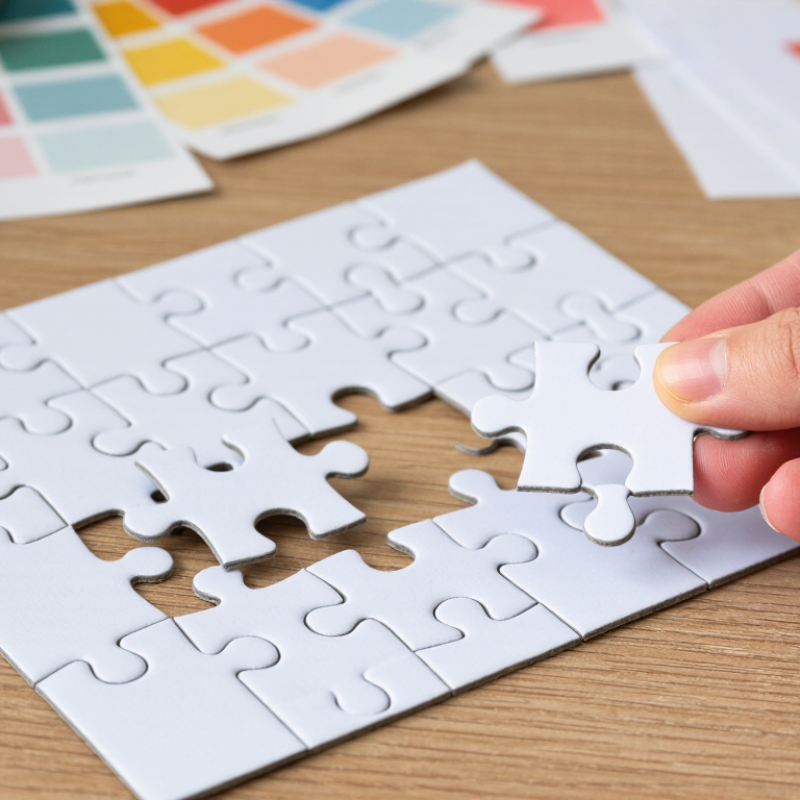
Blank puzzles are unfinished jigsaw puzzles with a printable, writable, or paintable surface. Their pieces usually arrive without a fixed image, leaving the artwork open to personal design. Depending on the material, creators can add photographs, illustrations, classroom diagrams, or hand-drawn patterns. A smooth white face helps colors appear clear. A sturdy backing also reduces bending during repeated handling.
Custom designs begin with practical choices. Select the piece count according to the audience and image detail. Fewer pieces work well for young children or quick activities. More pieces create a slower, more demanding experience. Before production, print a small sample and inspect tiny text, pale colors, and edge alignment. These details can look correct on a screen but lose clarity on physical pieces.
Blank puzzles support testing, too. Designers can compare matte and glossy finishes under normal room lighting. Matte surfaces often reduce glare, while glossy coatings may make colors appear brighter. I have found that crowded artwork can feel confusing after cutting, even when the original file looked balanced. That result is not a failure, but it deserves revision. Leaving more visual space may improve recognition and make each completed section feel intentional. Surface texture, ink adhesion, and storage conditions should also be checked before ordering larger quantities.
Which Materials and Formats Are Available for Blank Puzzles?
Blank puzzles give creators a practical surface for custom artwork, classroom activities, and memorable gifts. The material affects the puzzle’s feel, durability, and printing quality. Choosing well matters.
Chipboard is the most common option. It is lightweight, affordable, and suitable for colorful printed designs. A coated surface can improve image sharpness, but excessive moisture may cause warping. Thicker board feels stronger, although it can increase shipping weight.
Wood offers a warmer, more premium experience. Birch and similar plywood materials provide a natural grain and firm handling. However, wood thickness can vary slightly, which may affect piece fitting. I recommend checking the cut edges before approving a large order. Small flaws become noticeable quickly.
Acrylic blanks create a clean, modern appearance. They support bright graphics and unusual shapes, but scratches require careful packaging. Foam board is lighter and safer for temporary displays, though it may not survive repeated assembly.
Formats can include traditional rectangular jigsaws, square puzzles, panoramic layouts, circles, and custom silhouettes. Piece counts range from simple children’s designs to detailed adult challenges.
Large pieces suit younger users, while irregular cuts add difficulty. Tray-style formats also help keep pieces organized. Flat packaging is convenient, but it may offer less protection. That trade-off deserves attention.
How Can Blank Puzzles Be Personalized for Different Creative Goals?
Personalization starts with the creative goal, not the puzzle shape. A blank puzzle can become a classroom activity, a wedding keepsake, or a small art project. I have found that the intended audience should guide every design choice. Children may need bold lines and simple color blocks. Adults might prefer delicate illustrations, handwritten notes, or a meaningful map.
For a collaborative project, divide the surface into clear zones. Each person can design one section without losing the overall image. A printed guide beneath the artwork can help, but it may reduce the handmade feeling. That trade-off deserves attention. For educational use, add questions, labels, or matching symbols to selected pieces. Keep the print readable at actual size. Tiny details often disappear after cutting. Test one sample before producing a larger batch.
Different materials also support different outcomes. A smooth surface suits colored pencils, markers, and carefully applied paint. Light pencil marks support revisions, while permanent ink creates stronger contrast. Sealants may protect the finished work, but they can change texture and cause glare. Check material compatibility and allow enough drying time. Safety matters too, especially when children handle small pieces. Avoid sharp edges and inspect each piece before use.
Personalization is not only about adding a name. It can reflect a memory, teach a concept, or invite several people to contribute. Some designs will fail on the first attempt. That is useful evidence.
What Are the Educational, Promotional, and Artistic Uses of Custom Puzzles?
Blank puzzles give custom ideas a practical surface. In classrooms, teachers can turn lessons into hands-on review activities. A geography puzzle might show local rivers, landmarks, or climate zones. Students assemble the image, then explain their choices. This supports recall, discussion, and fine-motor practice. It also reveals learning gaps. A difficult layout may confuse rather than teach. Test the puzzle with the intended age group before printing. Use clear labels, strong contrast, and pieces large enough for safe handling.
For promotional use, blank puzzles create memorable interaction around an event or message. A community group can print schedules, maps, or educational facts on the completed design. A small puzzle can fit inside an information pack. A larger version can invite visitors to collaborate at a table. Keep contact details readable after cutting. Add a short message to the finished image. Participation should feel rewarding, not forced. I have seen attractive designs fail because the pieces looked too similar. That mistake is easy to overlook.
Artists use blank puzzles as modular canvases for watercolor, collage, photography, or linework. Each piece can stand alone, while the assembled image creates a wider story. Uneven textures may add character. They may also weaken the final result. Check color balance across the cut lines, and leave breathing room around important forms. Choose durable board and verify the surface before applying delicate materials. A rough prototype helps. It may still expose flaws.
What Factors Should Be Considered When Choosing Blank Puzzles?
Why Choose Blank Puzzles for Custom Designs?
When creating a custom puzzle, the blank base deserves careful attention. I have found that material quality affects both printing and the final solving experience. Thick, rigid board usually feels more stable in the hands. However, excessive thickness can increase shipping costs and make storage less convenient. A smooth, bright surface helps colors appear clearer, especially in detailed artwork. Matte finishes reduce glare under indoor lighting. Glossy surfaces can look vivid, but fingerprints may become noticeable.
Piece size and cutting style also matter. Small pieces create greater difficulty and may frustrate younger users. Larger pieces are easier to handle, but they reduce visual complexity. The cut should feel clean, without rough edges or loose paper fibers. Ask for a physical sample when possible. Digital previews cannot show texture, stiffness, or cutting accuracy. I once focused too heavily on image sharpness and overlooked how tightly the pieces fit. That was a useful mistake.
Safety and production reliability should guide the selection. Check whether the materials are suitable for the intended age group and use environment. Confirm ink adhesion, color consistency, and resistance to light handling. Packaging should protect corners from bending during delivery. Piece counts also need verification before production, because small errors can affect customer trust. A dependable supplier should explain tolerances, provide production samples, and answer questions clearly. Cheap options may appear attractive, yet inconsistent cuts can weaken the entire custom design.