Why Choose Senfeng for Laser Cutting Machines?
Choosing a laser cutting machine is rarely about the largest power rating. It is about dependable results on the shop floor. Senfeng deserves attention because its machines connect cutting performance with practical production needs. Operators can process carbon steel, stainless steel, aluminum, and other common materials with controlled speed and accuracy. Clean edges matter. So does stable operation during long shifts.
Senfeng technical specialist Li Wei describes the principle clearly: “A laser is valuable only when it improves real production.” That view reflects an engineering-first approach. Senfeng machines commonly combine fiber laser sources, precision motion systems, intelligent control software, and automated assistance options. These features can reduce setup time and support repeatable cutting across different orders. In a busy workshop, details become visible. A stable beam helps maintain narrow cuts. Reliable focusing reduces unnecessary adjustment. Accessible controls help operators respond quickly when material thickness changes.
The benefits are practical.
Still, no machine removes every production challenge. Material quality, maintenance habits, operator training, and cutting parameters can affect final results. Buyers should test representative samples before making a decision. They should also review service response, spare-part access, energy use, and software compatibility. That step is sometimes overlooked. It should not be.
For manufacturers seeking a balanced combination of productivity, precision, and long-term support, Senfeng offers a credible option. Its value is best judged through documented performance, real workshop trials, and transparent technical communication. That is a more reliable path than choosing equipment by marketing claims alone.
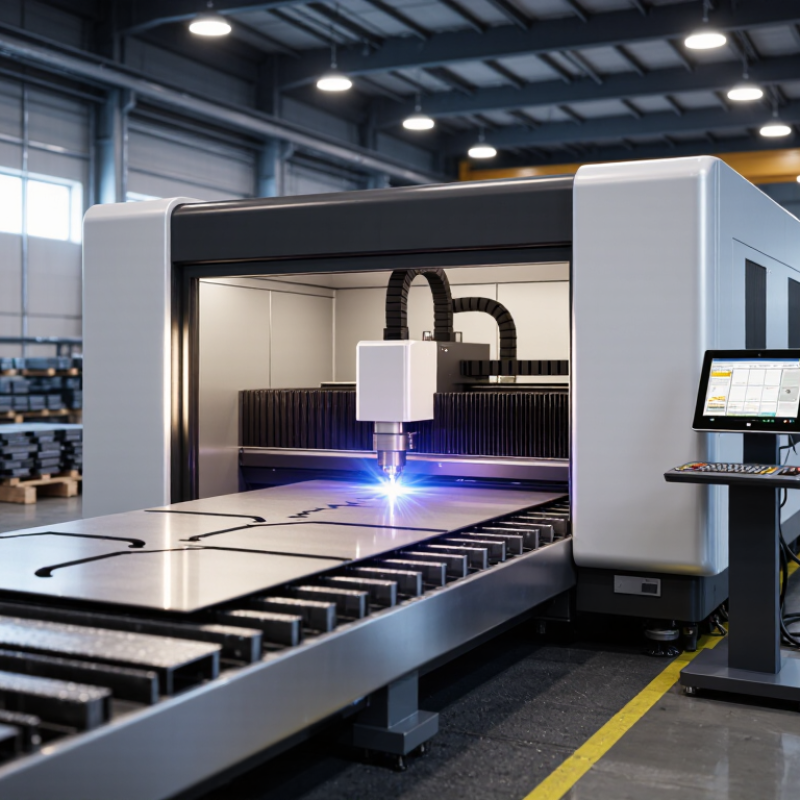
Senfeng’s Company Background and Laser Cutting Expertise
A laser cutting machine supplier should be judged by its engineering history, not by showroom images. A strong company background includes documented factory experience, trained engineers, and repeatable testing procedures. Its team should understand beam quality, assist-gas control, thermal distortion, and material behavior. These details affect the edge of a 6-millimeter steel plate. Small errors become expensive quickly.
Market evidence supports this technical focus. MarketsandMarkets estimates the laser cutting machine market could grow from about USD 6.8 billion in 2024 to USD 10.5 billion by 2029. The report identifies automation and fiber-laser adoption as important growth drivers. The International Federation of Robotics recorded 541,302 industrial robot installations worldwide in 2023. This figure shows how quickly factories are linking cutting, handling, and production data. Cutting equipment now needs more than raw power.
Real expertise appears in practical support. A reliable manufacturer should provide sample cutting, parameter testing, installation training, and maintenance guidance. Engineers should explain why a nozzle fails, not only replace it. ISO-based quality procedures can improve traceability, although certification alone proves little. That is an important weakness in many supplier evaluations. Some claims remain difficult to verify. Customers should request cut samples, test records, uptime definitions, and service-response data before purchasing. The best background is visible in consistent machine details, clear documentation, and engineers who have solved problems on a factory floor.
Senfeng Machine Types and Their Suitable Applications
Choosing the right laser cutting machine starts with the material, thickness, and production rhythm. Fiber laser machines suit stainless steel, carbon steel, aluminum, and brass. They offer fast piercing and lower maintenance for daily sheet-metal work. CO₂ machines remain useful for acrylic, wood, plastics, and thicker nonmetal materials. They create clean edges, though their operating costs may be higher.
Flatbed systems fit metal sheets and support workshops producing panels, brackets, cabinets, and machine parts. Tube laser machines process round, square, and rectangular profiles. They reduce manual drilling and improve alignment in frames, railings, and furniture structures. Three-dimensional laser systems serve formed components, including automotive panels and complex industrial parts. The choice is not always obvious. A fast machine can still waste money when its work envelope is wrong.
According to Fortune Business Insights, the global laser cutting machine market was valued at approximately USD 5.6 billion in 2023 and is expected to exceed USD 10 billion by 2032. This growth reflects wider adoption in fabrication and automated manufacturing. Practical evaluation should include laser power, cutting speed, nesting software, extraction, operator training, and service response. A 6 kW fiber system may cut 20 mm steel effectively, but actual results depend on gas pressure, nozzle condition, and material quality. Test samples matter. So does honest downtime data.
Laser Cutting Machine Types and Suitable Applications
Operating wavelength is a practical way to distinguish laser machine types. Fiber lasers are widely used for metal sheet and tube cutting, CO₂ lasers are suitable for non-metal materials and some thin metals, UV lasers are preferred for cold processing and precision work, and ultrafast lasers support micro-machining with minimal heat-affected zones. Actual performance depends on laser power, material, thickness, optics, and process settings.
Quality Control, Safety Features, and Production Standards
Why Choose a Laser Cutting Machine Supplier?
Quality control begins before a machine reaches the factory floor. A dependable manufacturer records steel thickness, weld measurements, guideway accuracy, and electrical test results. ISO 9001:2015 requires controlled processes, documented inspections, and corrective actions. These details matter when a cutting head moves across a large sheet at high speed.
Small errors become expensive quickly.
The 2024 World Robotics report recorded 541,302 industrial robot installations worldwide in 2023. This growth increases the need for reliable integration between lasers, drives, sensors, and operators. Safety should follow ISO 12100 risk assessment principles. Enclosed cutting areas, interlocked doors, emergency stops, fume extraction, and beam protection reduce foreseeable hazards. IEC 60204-1 also guides electrical equipment design for industrial machines. A supplier should provide test records, maintenance procedures, and clear operator training, not just attractive specifications.
Production standards reveal the difference between a showroom sample and daily performance. I would check repeatability through measured test cuts, not photographs. I would also ask how failed components are traced and replaced. No factory is flawless. Even strong inspection systems can miss a loose connector or uneven material. That is why layered checks matter. A practical audit should review incoming materials, assembly torque, calibration intervals, software versions, and final cutting samples. The best choice is not the loudest promise. It is the supplier that can show evidence, explain limitations, and improve when the evidence exposes a weakness.
After-Sales Service, Customization, and Ownership Considerations
After-Sales Service, Customization, and Ownership Considerations
A laser cutting machine is not simply a machine purchase. It becomes part of daily production. Industry reports reflect this shift. The World Robotics 2024 report recorded 541,302 new industrial robots installed worldwide in 2023. Automation is expanding, but uptime still depends on human support.
Reliable after-sales service should include remote diagnostics, spare-parts planning, operator training, and scheduled maintenance. Ask how quickly engineers respond when a cutting head alarms at 2 a.m. Also check whether service records are documented. Clear records build trust. In my experience, vague promises create expensive delays. The machine may be excellent, yet poor communication can damage production.
Customization deserves equal attention. A workshop cutting thin stainless steel needs different power, software, extraction, and loading options than a heavy fabrication plant. A suitable supplier should review material thickness, sheet size, nesting habits, and future capacity before recommending specifications. The 2024 World Manufacturing Forum report highlights resilience and flexible production as major manufacturing priorities. That supports modular equipment choices, but customization can also become excessive. More options do not always mean better value. Ownership costs include electricity, lenses, nozzles, gas, maintenance, training, and downtime. Request a five-year cost estimate, not only the purchase price. Leave room for doubt. Real production changes faster than most forecasts.